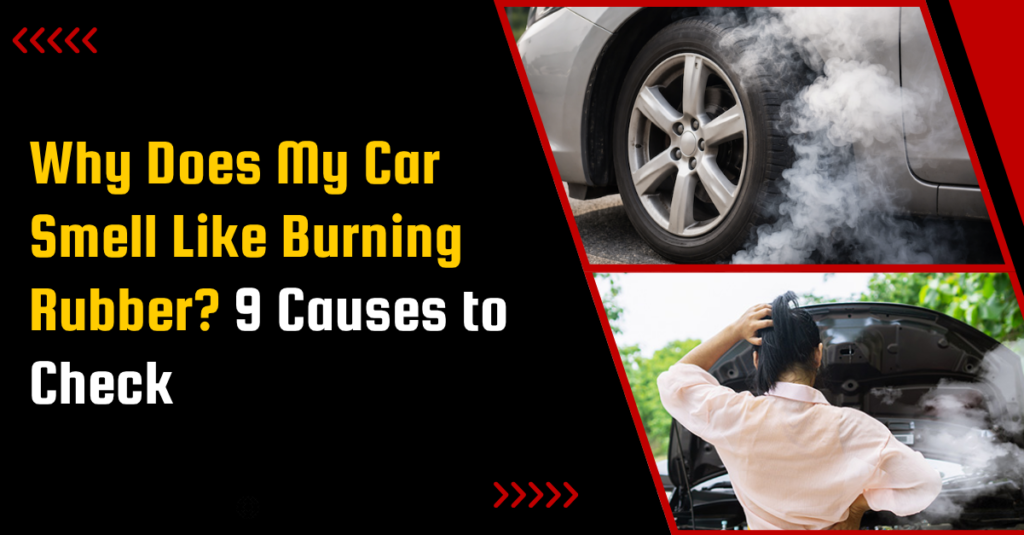
Why Does My Car Smell Like Burning Rubber? 9 Causes to Check
Why Does My Car Smell Like Burning Rubber? 9 Causes
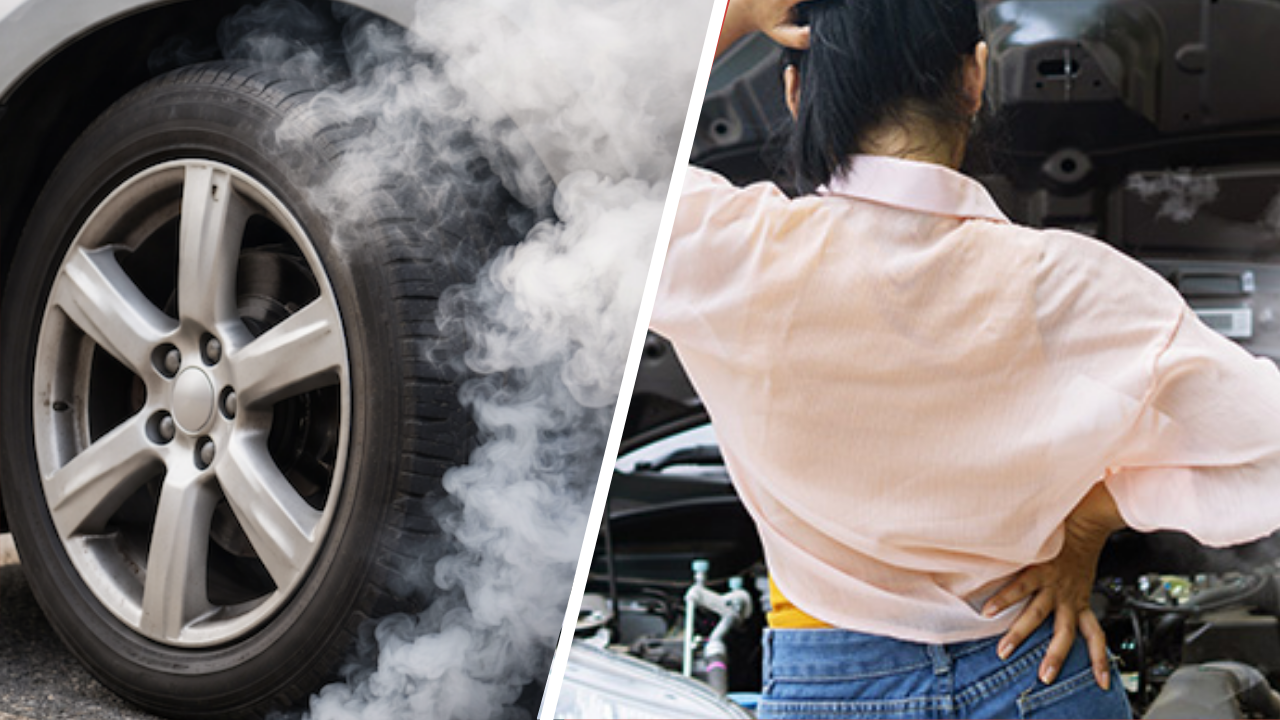
If you are wondering, “Why does my car smell like burning rubber?”, don’t ignore it. A burning-rubber smell can come from something as simple as a plastic bag stuck underneath the vehicle, but it can also indicate a slipping drive belt, overheating brake component, leaking fluid, or another mechanical problem that needs attention.
The smell may be especially noticeable after accelerating, braking, driving uphill, sitting in traffic, or turning the steering wheel. Sometimes the smell disappears after a few minutes. Other times, it becomes stronger every time you drive.
In this guide, we’ll cover 9 common causes of a burning rubber smell from your car, the warning signs that can help identify the source, what you can safely check yourself, when you should stop driving, and how to prevent the problem from becoming an expensive repair.
Why Does My Car Smell Like Burning Rubber?
A burning-rubber smell usually means that a rubber, plastic, or rubber-like component is becoming excessively hot, rubbing against another component, or coming into contact with a hot engine or exhaust part.
However, the smell isn’t always caused by rubber itself. Some overheated fluids and brake components can produce a smell that drivers describe as similar to burning rubber.
The most common causes include:
- Serpentine belt slipping or overheating
- Worn or damaged rubber hoses
- Brakes overheating
- Tire rubbing against the body or suspension
- Oil or other fluids leaking onto hot components
- Clutch slipping in a manual-transmission vehicle
- Plastic or debris touching the exhaust
- Overheated electrical components or wiring
- Air-conditioning or accessory-system problems
Identifying when the smell occurs can provide an important clue.
1. A Slipping or Damaged Serpentine Belt
One of the first things to consider is the serpentine belt. This belt drives important accessories such as the alternator, air-conditioning compressor, power-steering pump on some vehicles, and other components depending on the vehicle design.
If the belt becomes worn, loose, contaminated, or damaged, it can slip over a pulley. That friction creates heat and can produce a strong burning-rubber smell.
Signs of a Serpentine Belt Problem
- Squealing or chirping noises from the engine bay
- Burning-rubber smell after starting or accelerating
- Visible cracks or fraying on the belt
- Battery warning light
- Loss of air-conditioning performance
- Heavy or unusual steering on vehicles using a belt-driven hydraulic steering pump
A broken serpentine belt can cause several systems to stop working. On some engines, it can also lead to overheating if the belt drives the water pump.
If you suspect a belt problem, have it inspected rather than continuing to drive until the belt fails.
2. Overheating Brakes
If the burning smell appears after heavy braking, driving downhill, towing, or stop-and-go traffic, overheated brakes could be the cause.
Brake pads and rotors can become extremely hot during repeated braking. A sticking brake caliper can make the problem worse because the brake remains partially engaged even when you’re not pressing the pedal.
You may notice:
- Burning smell coming from one wheel
- A vehicle pulling to one side
- Brake pedal changes
- Smoke or visible heat from a wheel area
- One wheel feeling significantly hotter than the others
- Reduced braking performance
Don’t touch a wheel, brake rotor, or caliper immediately after heavy braking. These components can be hot enough to cause serious burns.
3. Tire Rubbing Against the Wheel Well
A tire rubbing against the inner fender, wheel-well liner, suspension component, or another part of the vehicle can create a burning-rubber smell.
This is particularly common after changing wheel or tire sizes, lowering a vehicle, installing aftermarket suspension components, or carrying a heavy load.
The smell may become noticeable when:
- Turning sharply
- Driving over bumps
- Carrying heavy passengers or cargo
- Accelerating hard
- Driving on uneven roads
Look for shiny or worn patches on the tire sidewall or inside the wheel well. Even minor rubbing shouldn’t be ignored because repeated contact can damage the tire.
4. Oil or Other Fluid Leaking Onto a Hot Component
Not every burning smell comes from an actual rubber component.
Engine oil, transmission fluid, power-steering fluid, or another fluid can leak onto a hot engine or exhaust component and create a strong burning odor.
For example, an oil leak from the upper part of the engine may allow oil to reach a hot exhaust component. The resulting smell can sometimes be mistaken for burning rubber.
Possible clues include:
- Burning smell after the engine warms up
- Smoke or light vapor from under the hood
- Oil spots underneath the vehicle
- Low engine oil level
- Visible fluid residue around the engine
A fluid leak should be diagnosed promptly because some fluids can ignite if they reach extremely hot surfaces.
5. Worn or Damaged Rubber Hoses
Modern vehicles use numerous rubber and rubber-like hoses throughout the engine compartment. Cooling-system hoses, vacuum hoses, air-intake components, and other flexible connections can deteriorate over time.
A damaged hose may become soft, cracked, swollen, or brittle.
If part of the hose moves close enough to a hot exhaust component, it can begin to melt or burn. The smell may be your first warning.
Coolant hoses deserve particular attention. If a cooling-system hose fails, the engine can lose coolant quickly and potentially overheat.
If you see a damaged hose, melted rubber, coolant residue, or steam, don’t continue driving until the vehicle has been properly inspected.
6. A Slipping Clutch
Manual-transmission vehicles can develop a distinctive burning smell when the clutch is slipping.
The clutch connects the engine to the transmission. When the clutch doesn’t fully engage, friction between the clutch components creates heat.
The smell is often described as burnt rubber, burnt paper, or a sharp chemical odor.
Common Signs of a Slipping Clutch
- Engine RPM rises without a matching increase in vehicle speed
- Difficulty accelerating
- Burning smell after hill starts
- Clutch engagement feels unusual
- Difficulty maintaining speed under load
- Vehicle struggles more when carrying passengers or driving uphill
Repeated clutch slipping can rapidly increase wear and turn a relatively manageable problem into a much more expensive repair.
Automatic and dual-clutch transmissions can also experience clutch-related problems, although the symptoms and components involved differ from a traditional manual clutch.
7. Plastic or Road Debris Touching the Exhaust
Sometimes the cause is surprisingly simple.
A plastic bag, piece of packaging, road debris, or another material can become trapped underneath the vehicle and stick to a hot exhaust component.
As the exhaust heats up, the material melts or burns and produces a strong smell.
You might notice the odor after driving but not see any mechanical warning signs.
If you suspect this is the cause, allow the vehicle to cool completely before inspecting underneath it. Never reach near a hot exhaust system.
Do not attempt to remove material from a hot exhaust. Wait until everything has cooled to a safe temperature.
8. Overheated Electrical Wiring or Components
An electrical problem can sometimes produce a smell that resembles burning rubber or melting plastic.
Damaged wiring, overloaded circuits, loose electrical connections, or failing electrical components can generate excessive heat.
Warning signs may include:
- Burning plastic smell
- Flickering lights
- Electrical accessories behaving strangely
- Blown fuses
- Smoke from the dashboard or engine bay
- Visible melted insulation
Electrical burning should be treated seriously because overheated wiring can create a fire risk.
If you see smoke or smell strong burning plastic inside the cabin, safely stop the vehicle and turn it off. If there is an active fire, move away from the vehicle and contact emergency services.
9. Air-Conditioning or Accessory System Problems
If the burning smell appears mainly when you turn on the air conditioning, one of the belt-driven accessories or related components could be struggling.
A failing A/C compressor bearing, seized accessory pulley, or belt problem can place excessive load on the serpentine belt.
The belt may begin slipping as the compressor engages, creating a burning smell.
Pay attention to whether the smell appears specifically when:
- The A/C is switched on
- The blower is operating
- The engine is idling
- The vehicle is accelerating
If the smell is consistently linked to A/C operation, have the belt and accessory system inspected.
How to Find Where the Burning Smell Is Coming From
Finding the location of the smell can help narrow down the cause, but don’t put yourself in danger trying to locate it.
Check When the Smell Appears
Think about exactly when you notice the odor.
- During acceleration: Consider a slipping belt, clutch, or drivetrain-related issue.
- After braking: Overheated brakes become more likely.
- During sharp turns: Check for possible tire rubbing.
- When A/C is switched on: Consider the belt and A/C compressor.
- After parking: Look for fluid leaks or debris contacting hot components.
- Inside the cabin: Electrical, HVAC, or heater-related problems may need attention.
What Should You Do If Your Car Smells Like Burning Rubber?
Don’t automatically assume the smell will disappear on its own.
Follow these basic steps:
- Safely pull over if the smell becomes strong.
- Turn off the engine if you suspect overheating or a serious mechanical problem.
- Look for smoke from a safe distance.
- Allow the vehicle to cool completely.
- Check for obvious tire damage or debris around the vehicle.
- Check fluid levels only according to the vehicle manufacturer’s instructions.
- Have the vehicle inspected if the smell returns or you cannot identify the source.
Never place your hands near moving belts, fans, hot exhaust components, or other moving engine parts.
When Is a Burning Rubber Smell an Emergency?
Some causes are minor, but certain symptoms mean you should stop driving.
Get professional help immediately if you notice:
- Smoke coming from the engine compartment
- Smoke coming from a wheel
- Visible flames
- Rapid overheating
- Loss of braking power
- A damaged tire
- Strong electrical burning smell
- Major fluid leakage
- A loud belt or pulley noise
If the vehicle is on fire, don’t open the hood unnecessarily. Move to a safe location away from the vehicle and contact emergency services.
Common Mistakes to Avoid
Ignoring the Smell
A burning smell is an early warning signal. Waiting for a dashboard warning light can allow a small mechanical problem to become a major failure.
Continuing to Drive Because the Car Still Runs
A vehicle can continue operating even when an important component is overheating or wearing out.
Touching Hot Components
Brakes, exhaust components, coolant systems, and engine parts can remain dangerously hot long after the vehicle has stopped.
Using Your Hands to Check a Moving Belt
Never attempt to inspect a running serpentine belt by touching it. A moving belt and pulley system can cause serious injuries.
Assuming Every Burning Smell Is a Belt
A burning odor can come from brakes, tires, fluids, electrical components, clutch components, or debris. Proper diagnosis matters.
How to Prevent Burning Smells From Developing
Regular maintenance can help identify many of these problems before they become serious.
- Inspect the serpentine belt during routine maintenance.
- Replace worn belts according to the vehicle manufacturer’s recommendations.
- Check tires for uneven wear and rubbing.
- Maintain correct tire pressure.
- Have brake components inspected regularly.
- Repair oil and coolant leaks promptly.
- Inspect aging hoses and clamps.
- Keep the engine bay free of loose debris.
- Pay attention to unusual noises as well as smells.
- Have recurring burning odors professionally diagnosed.
Why Early Diagnosis Can Save Money
A burning smell doesn’t necessarily mean your car needs a major repair. In fact, catching the problem early may save you money.
A worn belt can be easier and cheaper to address before it breaks. A small oil leak can be repaired before it reaches more components. A tire rubbing issue can be corrected before the tire becomes unsafe. Brake problems can be addressed before excessive heat damages additional parts.
The longer an overheating or friction-related problem continues, the greater the chance of secondary damage.
Conclusion
If you’re asking, “Why does my car smell like burning rubber?”, there are several possible answers. A slipping serpentine belt, overheated brakes, tire rubbing, leaking fluid, damaged hoses, slipping clutch, melted road debris, electrical problems, and A/C-related issues can all produce a similar smell.
The most important thing is not to ignore a new or persistent burning odor. Pay attention to when it happens, where it seems strongest, and whether it is accompanied by smoke, unusual noises, warning lights, overheating, or changes in vehicle performance.
If the smell is strong, you see smoke, the brakes feel different, the vehicle overheats, or you suspect an electrical problem, stop driving and have the vehicle inspected.
A strange smell is often your car’s early warning system. Finding the cause before a component fails can help protect your vehicle, your wallet, and most importantly, your safety.
Frequently Asked Questions
1. Why does my car smell like burning rubber when I accelerate?
A burning-rubber smell during acceleration can be caused by a slipping serpentine belt, slipping clutch in a manual vehicle, tire rubbing, or another component experiencing excessive friction. The exact cause depends on the vehicle and other symptoms.
2. Can low oil cause a burning rubber smell?
Low oil itself doesn’t normally smell like burning rubber, but an oil leak can allow engine oil to reach hot exhaust or engine components. This can create a strong burning odor and sometimes smoke.
3. Why does my car smell like burning rubber after driving?
The smell may come from overheated brakes, a slipping belt, tire rubbing, fluid leaking onto hot components, or debris touching the exhaust. If the smell repeatedly returns, the vehicle should be inspected.
4. Is it safe to drive when my car smells like burning rubber?
It depends on the cause, but continuing to drive without identifying the source is risky. If there is smoke, overheating, brake trouble, tire damage, electrical burning, or a strong persistent smell, stop driving and seek professional assistance.
5. How do I stop my car from smelling like burning rubber?
The solution depends on the cause. A worn belt, overheated brake, rubbing tire, leaking fluid, damaged hose, slipping clutch, electrical problem, or exhaust debris must be addressed at its source. A mechanic can inspect the vehicle and identify the underlying problem.