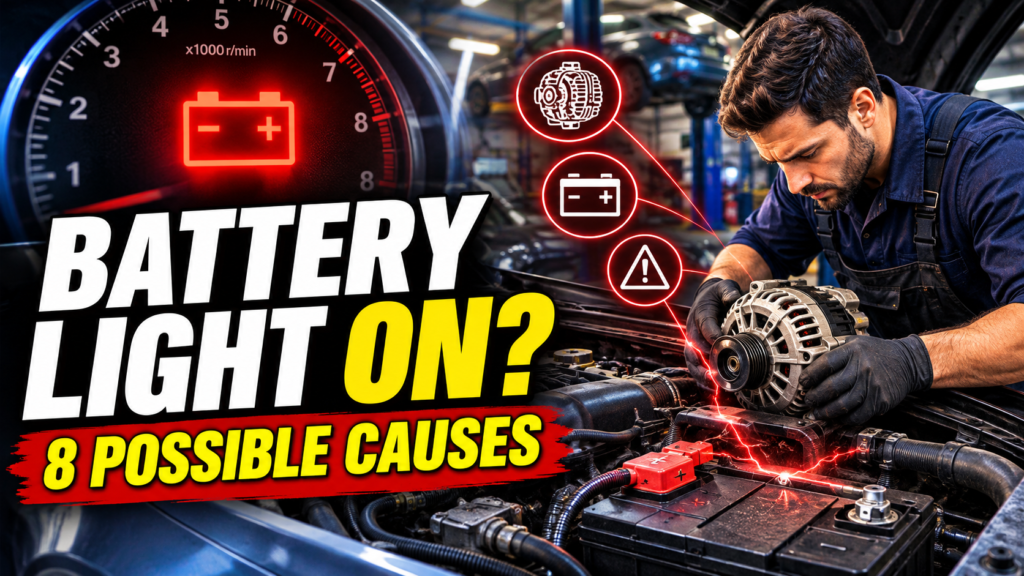
Why Is My Car Battery Light On While Driving? 8 Causes
Why Is My Car Battery Light On While Driving? 8 Causes and What to Do

Seeing your car battery light on while driving can be worrying, especially when the vehicle seems to run normally. You might notice a red battery-shaped warning symbol on your dashboard, but the engine continues running and all the electrical systems appear to work. Does this mean your battery is about to die? Not necessarily.
In most vehicles, the battery warning light indicates a problem with the charging system rather than simply a weak battery. Your alternator, drive belt, wiring, voltage regulator, or battery connections may be preventing the battery from receiving the correct charge. If the problem is ignored, the vehicle may eventually lose electrical power and stop running.
The good news is that identifying the warning signs early can help you avoid an unexpected breakdown and potentially expensive repairs. In this guide, we explain eight common reasons your car battery light comes on while driving, how to identify the problem, what you should do immediately, and when professional assistance is necessary.
What Does the Battery Warning Light Mean?
The battery warning light is part of your vehicle’s charging system monitoring system. When you switch on the ignition before starting the engine, the battery symbol normally illuminates briefly as part of the dashboard self-check. It should usually turn off after the engine starts.
If the battery light stays illuminated or comes on while driving, it generally means the charging system is not operating as expected. The alternator normally generates electricity while the engine runs. It supplies power to electrical components and helps recharge the battery.
When the charging system fails, your vehicle may start using the electricity stored in the battery. Once that stored energy is depleted, important electrical systems can stop working, and the engine may eventually stall.
Important: The battery warning light does not automatically mean you need a new battery. Replacing the battery without diagnosing the charging system may not solve the problem.
8 Common Reasons Your Car Battery Light Is On While Driving
1. A Failing Alternator
A failing alternator is one of the most common reasons for a battery warning light appearing while driving. The alternator is responsible for producing electricity to operate the vehicle’s electrical systems and maintain the battery’s charge.
Over time, alternator components can wear out. Internal bearings, brushes, diodes, or electrical windings may develop problems. When the alternator cannot generate enough electricity, the battery may no longer receive the required charge.
Common symptoms include:
- The battery warning light remains illuminated while driving.
- Headlights become noticeably dimmer or flicker.
- Dashboard lights behave unusually.
- Electrical accessories work inconsistently.
- The engine may struggle or eventually stall.
- The vehicle may fail to start after being switched off.
In some cases, an alternator may work intermittently. This means the battery light could appear and disappear depending on engine speed, temperature, or electrical demand.
Possible solution: A mechanic should test the alternator’s charging output and inspect its internal condition. Depending on the diagnosis, the alternator may need professional repair or replacement.
2. A Loose, Damaged, or Broken Serpentine Belt
Your vehicle’s serpentine belt transfers engine power to several accessories, which may include the alternator, water pump, air conditioning compressor, and power steering pump, depending on the vehicle design.
If the belt becomes loose, slips, cracks, or breaks, the alternator may stop rotating at the correct speed. As a result, the charging system may not produce enough electricity to keep the battery charged.
A damaged belt can sometimes create noticeable warning signs before it fails completely.
Look for these symptoms:
- A squealing or chirping noise from the engine area.
- Visible cracks or fraying on the belt.
- A battery warning light that appears intermittently.
- Heavy steering on vehicles with belt-driven hydraulic power steering.
- Engine temperature rising on vehicles where the same belt drives the water pump.
Not every vehicle uses the same belt arrangement. Some modern vehicles have separate electric systems or different accessory drive designs.
Possible solution: Have the serpentine belt, tensioner, and pulleys inspected. A worn or damaged belt should be replaced with the correct specification. Do not continue driving if the belt has broken or the engine begins overheating.
3. Corroded or Loose Battery Terminals
Battery terminals provide the electrical connection between the battery and the vehicle. If these connections become loose, dirty, or corroded, electrical current may not flow correctly.
Corrosion often appears as a white, blue, or greenish powder around the battery terminals. Even a relatively small amount of corrosion can create resistance and interfere with the charging system.
Loose battery connections can also cause intermittent electrical problems. You might notice the dashboard warning light appearing when driving over bumps or when the vehicle vibrates.
Possible warning signs include:
- White or blue-green deposits around battery terminals.
- Difficulty starting the engine.
- Flickering dashboard lights.
- Electrical accessories switching off unexpectedly.
- Battery warning light appearing and disappearing.
Possible solution: A qualified person should inspect the battery terminals, cables, and connections. Corrosion should be cleaned using appropriate battery-safe procedures, and loose connections should be tightened correctly. Damaged terminals or cables may need replacement.
Always follow the vehicle manufacturer’s battery safety instructions. Avoid touching battery terminals with metal tools in a way that could short-circuit the battery.
4. A Faulty Voltage Regulator
The voltage regulator controls the alternator’s electrical output to help maintain the correct charging voltage. If it fails, the alternator may produce too little or too much voltage.
Both conditions can cause serious problems. Low charging voltage may leave the battery undercharged, while excessive voltage can damage the battery and sensitive electronic components.
In some vehicles, the voltage regulator is built into the alternator. In others, charging output is controlled by the engine computer or a separate electronic system.
Possible symptoms include:
- Battery warning light illuminating while driving.
- Headlights becoming unusually bright or dim.
- Interior lights flickering.
- Battery repeatedly becoming discharged.
- Unusual electrical behaviour.
- Premature battery damage.
Possible solution: A mechanic can measure the charging voltage and check the regulator’s operation. The correct repair may involve replacing the regulator, alternator assembly, or repairing the charging control system.
Do not assume that replacing the battery will fix a voltage regulation problem. The underlying charging fault must be identified first.
5. A Weak or Damaged Car Battery
Although the battery warning light usually indicates a charging-system problem, the battery itself can also contribute to electrical issues.
Car batteries gradually lose their ability to hold a charge. Extreme temperatures, repeated deep discharges, long periods without driving, and age can all affect battery performance.
A damaged battery may struggle to accept or retain a charge even when the alternator is working correctly.
Common signs of a weak battery include:
- Slow engine cranking when starting the car.
- Clicking sounds when turning the ignition key or pressing the start button.
- Dashboard lights becoming weak during startup.
- Electrical systems behaving inconsistently.
- The battery repeatedly losing its charge.
Possible solution: Have the battery tested using a suitable battery tester. A professional can check its condition, starting capacity, and ability to hold a charge. If the battery has failed, replace it with one that meets the manufacturer’s specifications.
Remember that a new battery can also become discharged if the alternator or another part of the charging system is faulty.
6. Damaged Alternator Wiring or Electrical Connections
The alternator needs properly functioning electrical connections to deliver electricity to the battery and vehicle systems. Damaged wiring, loose connectors, blown charging-system fuses, or poor grounding can interrupt this process.
Wiring problems may develop because of corrosion, heat, vibration, damaged insulation, previous repairs, or physical contact with moving engine components.
Sometimes the alternator itself is in good condition, but electricity cannot travel correctly through the wiring.
Symptoms may include:
- The battery light comes on intermittently.
- The warning light changes when the engine moves or vibrates.
- Electrical accessories stop working unexpectedly.
- Charging voltage is inconsistent.
- Visible damage or corrosion around electrical connectors.
Possible solution: A mechanic should inspect the alternator wiring, battery cables, grounding points, connectors, and relevant fuses. Damaged wiring should be repaired using suitable automotive-grade materials and manufacturer-approved procedures.
Electrical faults can be difficult to identify without the correct testing equipment. Avoid randomly replacing electrical components before checking the connections.
7. A Faulty Alternator Pulley or Tensioner
The alternator pulley and belt tensioner help ensure that the alternator receives consistent mechanical power from the engine. If either component fails, the alternator may not operate correctly.
Some vehicles use an overrunning alternator pulley that allows the alternator to rotate smoothly when engine speed changes. If this pulley becomes stuck or worn, it can create belt vibration, unusual noises, and charging problems.
A weak belt tensioner can also allow the belt to slip, reducing alternator performance.
Warning signs include:
- Squealing or rattling noises near the engine.
- Visible belt vibration.
- Battery warning light appearing intermittently.
- Unusual movement from the belt tensioner.
- Charging problems that become worse at certain engine speeds.
Possible solution: Have the alternator pulley, tensioner, and belt inspected together. Replacing only the belt may not solve the issue if a damaged pulley or tensioner is causing it to slip.
8. A Fault in the Battery Monitoring or Charging Control System
Modern vehicles often use sophisticated electronic charging systems. Depending on the model, these may include a battery management system, intelligent battery sensor, engine control module, and communication networks.
These systems monitor battery condition, temperature, electrical demand, and charging performance. They help the vehicle adjust alternator output to improve efficiency and protect the battery.
If a sensor, control module, connector, or communication circuit develops a fault, the dashboard may display a battery warning even when the alternator and battery appear to be functioning.
Possible symptoms include:
- Battery warning light appearing without an obvious mechanical problem.
- Charging behaviour changing unexpectedly.
- Other electrical warning messages appearing.
- Start-stop systems becoming unavailable.
- Diagnostic trouble codes related to battery monitoring or charging control.
Possible solution: A technician should scan the vehicle with suitable diagnostic equipment and check the charging control system, battery sensor, wiring, and related modules. Software updates or component replacement may be necessary depending on the diagnosis.
What Should You Do If the Battery Light Comes On While Driving?
If the battery warning light appears while driving, do not ignore it. Your vehicle may still be operating using electricity stored in the battery, but that power will not last indefinitely if the charging system has stopped working.
Follow these steps to reduce the risk of a breakdown:
- Stay calm and pay attention to the vehicle. Check whether the engine is running normally and look for other warning lights, unusual noises, smoke, or overheating.
- Turn off unnecessary electrical accessories. If safe, switch off items such as the heated seats, rear window heater, and unnecessary entertainment systems. Keep essential safety equipment, including lights and windscreen wipers, operating when needed.
- Look for additional warning signs. A rising temperature gauge, heavy steering, burning smell, or other warning lights may indicate a more serious problem.
- Find a safe place to stop. Avoid stopping in a dangerous location. If the vehicle is losing power or overheating, pull over as soon as it is safe.
- Switch off the engine when safely parked. Continuing to run the engine with a charging-system failure may eventually leave you stranded.
- Arrange professional assistance. Contact roadside assistance or a qualified mechanic to diagnose the charging system. Towing may be the safest option if the warning remains on.
Important safety advice: Do not assume you can safely drive a fixed distance after the battery light comes on. The remaining battery power and the vehicle’s electrical requirements vary considerably. A vehicle can lose power unexpectedly.
Can You Drive With the Battery Light On?
Technically, a vehicle may continue running for a short time after the battery warning light appears. However, that does not mean it is safe to continue driving.
If the alternator is not charging the battery, the vehicle will gradually use its remaining electrical power. Once the battery voltage becomes too low, the engine management system, fuel system, ignition system, and other essential components may stop operating correctly.
Depending on the vehicle, you may also lose or experience reduced assistance from systems such as electric power steering. Some vehicles may display additional warnings before they eventually stop.
You should avoid continuing your journey if:
- The battery warning light remains illuminated.
- The headlights are becoming dim or flickering.
- The engine begins to run roughly or lose power.
- The temperature gauge starts rising.
- You hear loud belt noises or smell burning rubber.
- Other important dashboard warning lights appear.
If the engine is overheating, smoke is visible, or there is a strong burning smell, stop as soon as it is safe and seek professional assistance. Do not open a hot cooling system.
How to Diagnose a Car Battery Warning Light
Finding the actual cause is important because several different problems can produce similar symptoms. A proper charging-system inspection usually includes the following checks.
1. Inspect the Battery and Connections
Check for loose terminals, corrosion, damaged battery cables, and visible battery damage. A professional can also test the battery’s condition and starting performance.
2. Test the Alternator Output
A mechanic can use a digital multimeter or dedicated charging-system tester to measure the electrical output. Many conventional 12-volt charging systems operate around 13.5 to 14.8 volts while charging, but the correct value depends on the vehicle and operating conditions.
Modern smart charging systems may intentionally vary their charging voltage. Therefore, one voltage reading should not be used alone to declare an alternator faulty.
3. Check the Drive Belt and Pulley System
The mechanic should inspect the serpentine belt, tensioner, alternator pulley, and related components. Any signs of slipping, cracking, unusual movement, or mechanical damage should be investigated.
4. Scan for Diagnostic Trouble Codes
Modern vehicles can store fault codes related to the alternator, battery sensor, charging circuit, or engine control system. An appropriate diagnostic scanner can help identify the affected system.
5. Check the Wiring and Ground Connections
Electrical connections, charging fuses, alternator connectors, and engine ground cables should be tested for excessive resistance, corrosion, or damage.
How to Prevent Battery and Charging System Problems
Although not every charging-system failure can be prevented, regular vehicle maintenance can reduce the risk of unexpected electrical problems.
- Inspect your battery regularly: Look for corrosion, damaged terminals, swelling, or signs of leakage.
- Test battery condition: Have the battery checked during routine servicing, especially if it is several years old.
- Check the serpentine belt: Follow the manufacturer’s inspection and replacement schedule.
- Pay attention to unusual noises: Squealing, rattling, and grinding sounds near the engine should be investigated.
- Keep electrical connections in good condition: Damaged cables and loose terminals should be repaired promptly.
- Investigate dashboard warnings early: Do not ignore a battery symbol simply because the vehicle still starts and drives.
- Use the correct replacement parts: Choose a battery and charging-system components that meet the vehicle manufacturer’s requirements.
If you regularly drive short distances or leave your vehicle unused for long periods, ask a mechanic whether your battery needs additional testing or suitable maintenance charging.
Conclusion
A car battery light on while driving is an important warning that should never be ignored. Although many drivers assume it means the battery needs replacing, the real problem may be a failing alternator, damaged serpentine belt, loose battery terminal, faulty voltage regulator, wiring issue, or electronic charging-system fault.
The most important thing is to identify the cause before the vehicle loses its remaining electrical power. If the warning light stays on, find a safe place to stop and arrange a professional inspection rather than continuing your journey and hoping the problem disappears.
Regular battery testing, belt inspections, and charging-system maintenance can help prevent unexpected breakdowns. Taking action early may also save you from more expensive repairs later.
Frequently Asked Questions
1. Does the battery light mean I need a new battery?
No. The battery warning light usually indicates a charging-system problem. A failing alternator, damaged belt, faulty voltage regulator, or loose electrical connection may be responsible. The battery should be tested before deciding whether it needs replacement.
2. How long can I drive with the battery light on?
There is no reliable distance or time that applies to every vehicle. If the alternator is not charging, the vehicle depends on the remaining power in the battery. That power can run out unexpectedly, so it is safest to stop when possible and arrange professional assistance.
3. Can a bad alternator cause the battery light to come on?
Yes. A failing alternator may not generate enough electricity to operate the vehicle’s electrical systems and recharge the battery. This is one of the most common reasons the battery warning light illuminates while driving.
4. Why does my battery light come on and then disappear?
An intermittent battery light may be caused by a slipping serpentine belt, loose electrical connection, worn alternator components, faulty pulley, or charging-system control issue. Even if the warning disappears, the problem should be diagnosed before it becomes worse.
5. Can a loose battery terminal cause the battery warning light to come on?
Yes. A loose or corroded battery terminal can interrupt the electrical connection and affect charging-system performance. Have the terminals and cables inspected and repaired safely rather than ignoring the warning.